




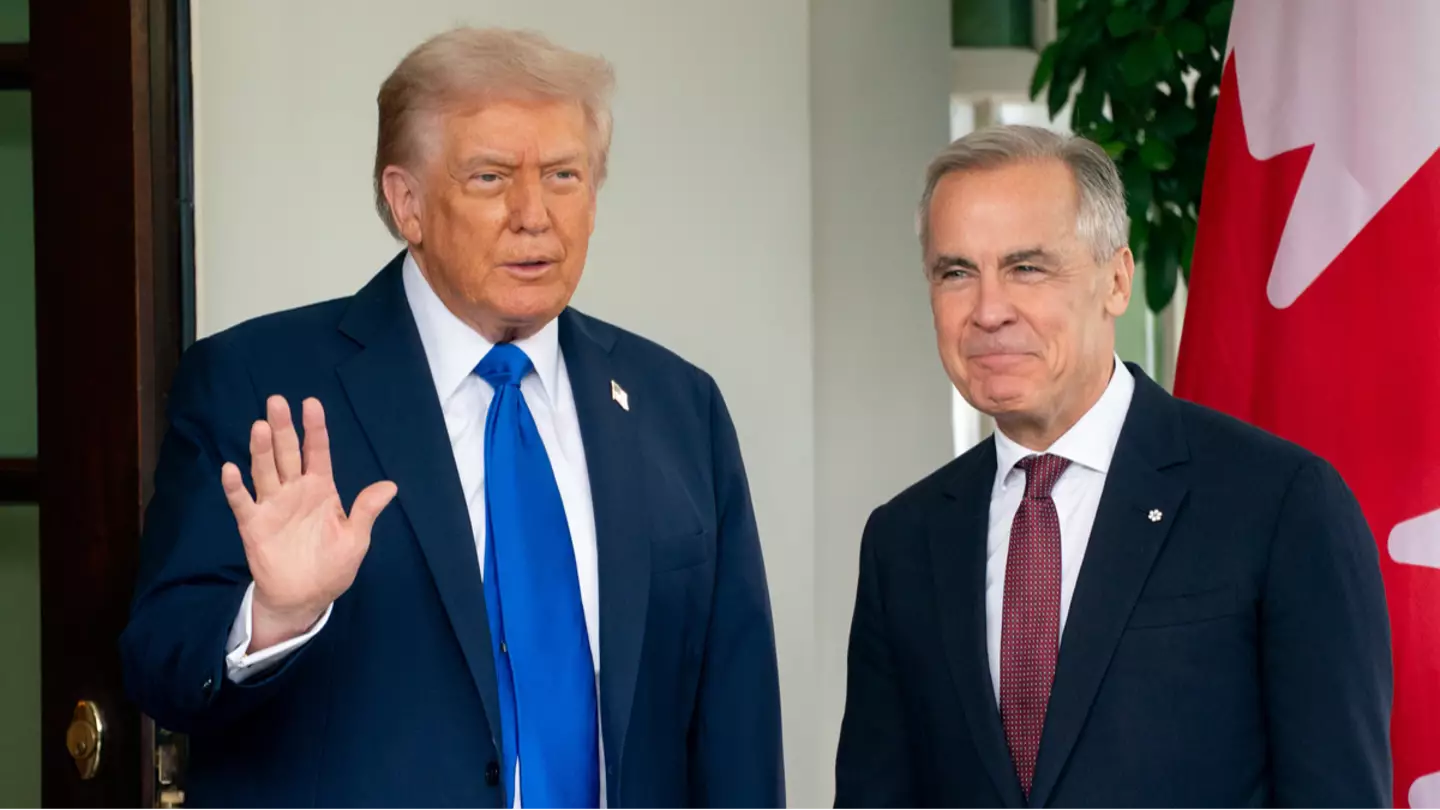
Washington In a dramatic escalation of North America’s economic standoff, former U.S. President Donald J. Trump has once again threatened Canada’s economy by signaling possible withdrawal or renegotiation of the Canada‑United States‑Mexico Agreement (CUSMA) ahead of its scheduled 2026 review. The move has sent shockwaves through political and business circles across both countries and heightened fears in Ottawa that Canada may need to take the first bold steps to protect its economic interests and long‑term prosperity.
The Canada‑U.S. trade relationship is one of the most integrated in the world, with roughly $3.6 billion in goods and services crossing the border each day. Nearly 70 % of Canadian exports are destined for the United States, and millions of jobs on both sides depend on this economic link. Yet the stability underpinning this partnership is now under threat as Washington adopts an increasingly protectionist stance.
Trade War Redux: Trump’s Threats Return
Trade tensions between the U.S. and Canada are not new, but they have escalated sharply since Trump’s return to the White House. With CUSMA scheduled to undergo its first joint review in 2026, Trump has reportedly warned Ottawa that if Canada and Mexico do not offer certain concessions, the United States could either let the pact expire, renegotiate parts of it unfavorably, or even withdraw entirely. The implications of such actions could be profound for both Canadian producers and North America’s broader economic architecture.
Officials in Washington have floated the idea of recalibrating the trade pact to demand that both partners align their tariff policies with U.S. strategic and economic priorities, effectively putting Canadian access to the U.S. market “for sale.” Such a tactic would represent a sharp departure from previous negotiations, which tended to emphasize mutual benefit and regional cooperation.
While the CUSMA deal technically cannot expire until 2036 under its built‑in terms, the 2026 review marks a critical inflection point. If all three parties cannot agree on extending the pact for another term, the agreement enters a period of annual reviews, prolonging uncertainty and opening the door for one party, particularly the U.S, to exit with six months’ notice. Trump has reportedly used this clause as leverage in ongoing discussions.
The Canadian Response: A Preemptive Move
Faced with mounting pressure from Washington, Canada has not remained idle. In an unprecedented move aimed at strengthening its negotiating position, Ottawa announced a reciprocal reduction of tariffs on U.S. goods covered under CUSMA, effectively re‑establishing free trade on a wide range of products before the 2026 review. The measure, re-effective September 1, 2025, was positioned by Canadian officials as a strategic effort to preserve the core benefits of CUSMA and ensure market access remains stable amid increasing trade friction.
Prime Minister Mark Carney’s government characterized the decision as part of a broader strategy to preserve economic ties while defending Canadian sovereignty and jobs. Carney said Canada now faces a “new trade reality” where previous strengths, deep integration with its giant neighbor,r have become vulnerabilities that need active management with diversified trade and robust domestic growth policies.
In tandem with the tariff rollback, Canada launched public consultations on the CUSMA deal in September 2025, seeking input from businesses and citizens to shape its priorities heading into the 2026 negotiations. Thousands of stakeholders contributed suggestions, overwhelmingly emphasizing the need to protect tariff‑free market access and avoid punitive barriers that could make Canadian goods less competitive abroad.
Economic Risks and Sector Impact
Despite these defensive moves, Canada’s economy is already feeling the bite of U.S. protectionist policies. Although the average U.S. tariff on Canadian goods remains lower than many feared due to CUSMA exemptions, certain sectors continue to face heightened duties. This includes steel and aluminum producers, which have endured tariffs as high as 50 % under U.S. “national security” provisions, a move Ottawa deems unjustified and damaging.
Experts warn that if CUSMA exemptions were removed entirely or significantly narrowed during negotiation, Canada’s economy could experience “long‑term scarring,” reducing its GDP growth prospects compared to current projections. Heavy industries such as forestry, manufacturing, and energy could be among the hardest hit, deeply integrated with U.S. supply chains.
Business sentiment surveys indicate that Canadian firms view the uncertainty surrounding CUSMA as a major risk factor. A recent survey by KPMG Canada found that 88 % of Canadian business leaders see the possible loss of trade protections as the biggest threat to their future, and more than 80 % believe that tariffs, even if temporary, are likely to become a permanent feature of U.S. trade policy.
Political Pressure at Home
The unfolding trade dispute has also triggered a wave of domestic political debate. Provincial leaders, particularly in industrial centres, have voiced concern about Washington’s tactics. Ontario Premier Doug Ford publicly warned that Trump could move to terminate CUSMA “with one signature,” urging Ottawa to prepare for multiple scenarios, including a full withdrawal by the United States.
Meanwhile, Canadian industry groups have called for more aggressive diversification of trade partnerships, including accelerating free‑trade talks with other regions such as Mercosur in South America, a bloc that includes Argentina, Brazil, Paraguay, and Uruguay. These efforts reflect a broader strategy to reduce reliance on a single market and build economic resilience amid U.S. unpredictability.
Public Sentiment and Consumer Reaction
The threat of trade disruption has also sparked grassroots movements. In 2025, a Canadian boycott of American goods and services emerged as a form of protest against U.S. tariffs and perceived threats to national sovereignty. The boycott swelled beyond consumer goods to include calls for reduced travel to the U.S., signaling deeper strains in public sentiment toward the neighbour.
Economic commentators point out that while consumer protests and boycotts are largely symbolic, they underscore a real shift in the bilateral relationship, moving from one rooted in mutual economic benefit toward one overshadowed by political and strategic contention.
What’s Next: CUSMA in 2026
As the world approaches the pivotal CUSMA review in 2026, both Ottawa and Washington are bracing for what could be the most consequential negotiation in decades. The review will determine whether the agreement can be extended with minimal changes or if fierce political winds will reshape North American trade for years to come.

Trump’s aggressive posture,e including threats to let parts of the agreement “expire” or to press for a new framework that demands concessions from both Canada and Mexico, has forced Canadian policymakers to consider unorthodox strategies for safeguarding their economic future. Ottawa’s decision to proactively restore tariff‑free trade on covered goods and broaden its global partnerships is seen as a strategic countermeasure to offset U.S. pressure. Analysts note that even if all parties fail to agree in 2026, CUSMA will remain in force under annual review terms, offering a buffer against sudden economic shocks. However, the ongoing uncertainty could continue to affect investment decisions, supply chains, and long‑term business planning on both sides of the border.
The Broader Global Context
The standoff also reflects growing global trends toward protectionism and trade realignment. Canada’s efforts to diversify its trade portfolio and engage with partners around the world are mirrored by other nations navigating a more complex international trading system. For Ottawa, balancing deep ties with the U.S. against evolving geopolitical realities remains a central challenge.